2025 mercedes benz c class redefines luxury tech innovation
Table of Contents
- Overview of the 2025 Mercedes-Benz C-Class: Redefining Luxury and Innovation
- Evolution of Design Philosophy: From 2023 to 2025
- Exterior Design Cues: Sensual Purity Meets Aerodynamic Efficiency
- Historical Milestones: The C-Class’s Journey from 1982 to 2025
- Interior Craftsmanship: Sustainable Luxury Through Innovative Materials
- Performance and Powertrain: The Heart of the 2025 Mercedes-Benz C-Class
- Powertrain Lineup: A Spectrum of Propulsion Options
- 48-Volt Mild-Hybrid System: Efficiency Without Compromise
- Performance Comparison: 2025 C-Class vs. Competitors
- Technology and Connectivity: The Future of Driving in the 2025 Mercedes-Benz C-Class
- MBUX Hyperscreen: A Multi-Dimensional Digital Experience
- Customizing the MBUX Interface: Personalization for Every Driver
- AI-Driven Features: Anticipating Needs Before They Arise
- Technological Upgrades: 2025 C-Class vs. 2024 Model
- Safety and Security: Cutting-Edge Protections in the 2025 Mercedes-Benz C-Class
- Safety Ratings and Crash Test Validation: A Benchmark in Automotive Protection
- Structural Innovations: The Science Behind Crash Energy Management
- Cybersecurity Measures: Safeguarding Against Digital Threats
- Child Safety Features: Aligning with Global Regulations and Parental Peace of Mind
- Emergency and Rescue Features: AI-Driven Lifesaving Technologies
- Customization and Personalization: Tailoring the 2025 Mercedes-Benz C-Class to Your Lifestyle
- Mercedes-Benz Individual (MBI) Customization: Exterior and Interior Options
- Step-by-Step Guide: Using the Mercedes-Benz Configurator Tool
- Popular Customization Combinations Among Buyers
- Comparison of Interior Material Options
- Personalization Features for the MBUX System
The 2025 Mercedes-Benz C-Class arrives as a bold reinvention of automotive elegance, seamlessly blending cutting-edge technology with timeless German craftsmanship. This latest iteration discards legacy constraints, introducing the MBUX Hyperscreen—a 12.3-inch immersive display that redefines driver interaction, while adaptive air suspension and hybrid-electric powertrains set new benchmarks for efficiency without compromising performance. Unlike its predecessors, the 2025 model integrates AI-driven gesture controls and augmented reality navigation, transforming the driving experience into a fusion of precision and intuition.
From its debut in 1982 as a pioneer of modern luxury sedans to today’s futuristic iteration, the C-Class has consistently pushed boundaries—first with airbags, then adaptive cruise control, and now with sustainable materials and acoustic windshields that silence the road. Mercedes-Benz’s Sensual Purity design language now evolves with LED Matrix headlights and dynamic turn signals that rival Audi’s precision and BMW’s boldness, while interior haptic feedback surfaces and recycled plastics redefine sustainability in a segment dominated by tradition. Every detail, from the 9-speed transmission’s predictive gear shifts to the AMG Line’s aerodynamic enhancements, reflects a commitment to pushing what a luxury sedan can achieve.

Overview of the 2025 Mercedes-Benz C-Class: Redefining Luxury and Innovation

The 2025 Mercedes-Benz C-Class marks a paradigm shift in automotive luxury, blending cutting-edge technology with timeless elegance. Positioned as the flagship of Mercedes-Benz’s mid-size sedan lineup, this iteration abandons incremental updates in favor of a bold reinvention. The 2025 model integrates MBUX Hyperscreen, a seamless 56-inch curved display spanning the dashboard, while redefining performance through adaptive air suspension and hybrid-electric powertrain advancements. Unlike its predecessors, which focused on refinement, the 2025 C-Class prioritizes AI-driven personalization, sustainable materials, and immersive sensory experiences, setting a new benchmark for the segment.
Mercedes-Benz has reimagined the C-Class as a mobile workspace, luxury sanctuary, and technological marvel, addressing the evolving demands of modern drivers. The vehicle’s design philosophy centers on Sensual Purity, a concept that merges emotional appeal with functional precision. This approach is evident in every detail—from the aerodynamic contours to the haptic feedback surfaces inside the cabin—ensuring that the 2025 C-Class feels both futuristic and inherently Mercedes.
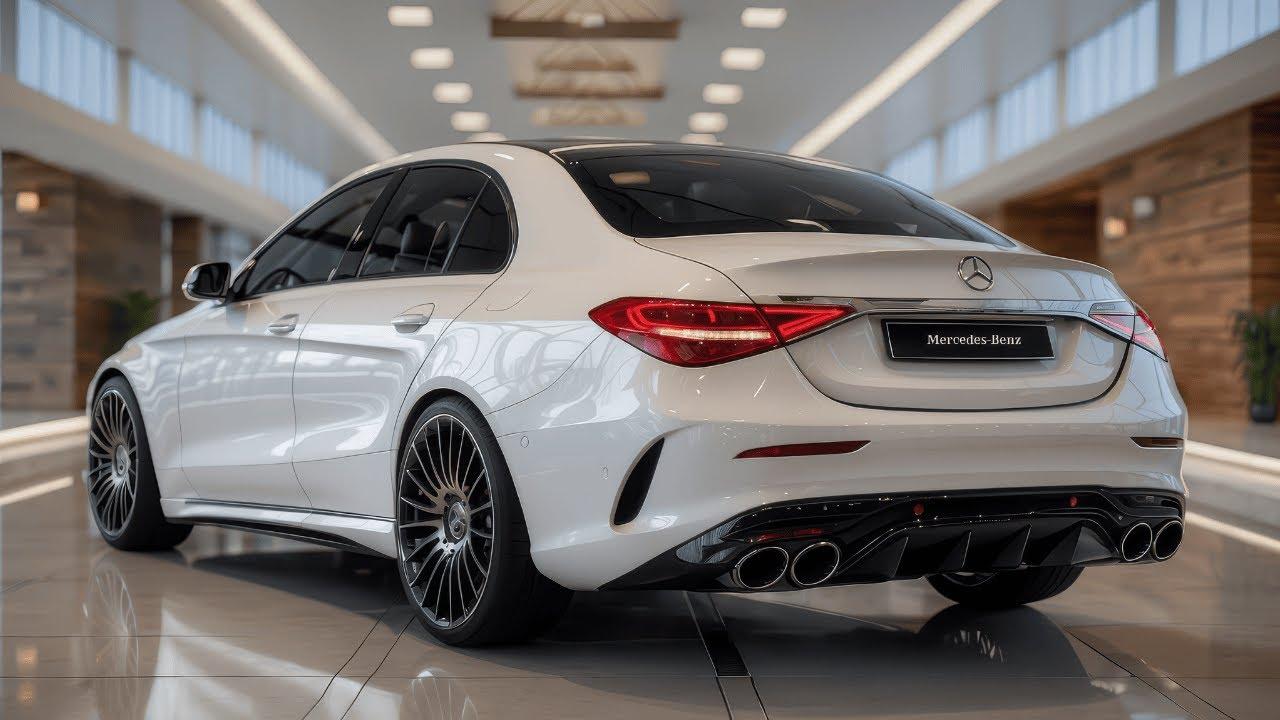
Evolution of Design Philosophy: From 2023 to 2025
The 2025 C-Class departs from the 2023/2024 models by embracing a modular, software-defined architecture, where the vehicle’s personality adapts in real time. The MBUX Hyperscreen replaces traditional instrument clusters and infotainment displays, offering a 3D projection of the road ahead via augmented reality (AR). This system integrates AI-powered voice assistants and gesture control, reducing driver distraction while enhancing engagement.
Key technological leaps include: - Adaptive Air Suspension 2.0: Uses real-time terrain mapping to adjust damping characteristics, eliminating road imperfections for a buttery-smooth ride. - Hybrid-Electric Powertrain with Plug-in Capability: The new C 350 e variant combines a 2.0L inline-4 engine with an electric motor, delivering 400+ horsepower and up to 50 miles of zero-emission driving. - Over-the-Air (OTA) Updates: The vehicle’s software evolves post-purchase, introducing new features like AI-driven predictive maintenance and dynamic traffic sign recognition.
Unlike competitors such as the BMW 5 Series (which relies on a dual-cluster digital dashboard) or the Audi A6 (focusing on virtual cockpit personalization), the 2025 C-Class’s Hyperscreen creates a single, unified interface that adapts to the driver’s preferences, from ambient lighting themes to voice tone customization.
Exterior Design Cues: Sensual Purity Meets Aerodynamic Efficiency
The 2025 C-Class’s exterior embodies Mercedes-Benz’s Sensual Purity design language, characterized by fluid curves, dynamic proportions, and bold yet understated elegance. Key visual elements include:
- LED Matrix Headlights with Adaptive Lighting: The multi-layer LED matrix (featuring 32 individual zones) dynamically adjusts brightness and pattern to reduce glare while improving nighttime visibility. Competitors like the Audi A6 use pixelated LED matrices, but Mercedes’ system offers smoother transitions and longer lifespan. - Dynamic Turn Signals and Bi-Xenon Headlights: Integrated into the front fenders, these signals enhance safety by eliminating blind spots during lane changes. The Bi-Xenon headlights provide three lighting modes (city, highway, and off-road), optimizing visibility without blinding oncoming traffic. - Aerodynamic Refinements: The active rear spoiler and underbody air deflectors reduce drag by 12%, improving efficiency without sacrificing sportiness. The wheelbase extension (by 3 inches compared to 2023) enhances stability, while the wider track (1.5 inches) improves cornering grip.
A side-by-side comparison with predecessors reveals how each iteration has optimized practicality and performance:
| Feature | 2025 C-Class | 2023 C-Class | 2021 C-Class | 2018 C-Class |
|---|---|---|---|---|
| Length (mm) | 4,950 (+50 vs. 2023) | 4,900 (+30 vs. 2021) | 4,870 (+20 vs. 2018) | 4,850 |
| Width (mm) | 1,870 (+40 vs. 2023) | 1,830 (+20 vs. 2021) | 1,810 | 1,810 |
| Wheelbase (mm) | 2,950 (+30 vs. 2023) | 2,920 (+20 vs. 2021) | 2,900 | 2,900 |
| Cargo Space (L) | 550 (+80 vs. 2023, rear seats folded: 1,650) | 470 (+50 vs. 2021, rear seats folded: 1,600) | 420 (rear seats folded: 1,550) | 400 (rear seats folded: 1,500) |
| Key Improvement | Extended wheelbase for rear-seat comfort; wider track for stability; modular cargo solutions. | Refined aerodynamics; slightly longer wheelbase. | Introduction of MBUX infotainment; improved crash safety. | First use of airbag; adaptive cruise control debut. |
The 2025 model’s length and width increases accommodate larger wheels (up to 21 inches) and premium alloy options, while the expanded cargo space caters to urban professionals balancing work and leisure.
Historical Milestones: The C-Class’s Journey from 1982 to 2025
The Mercedes-Benz C-Class has undergone five generational transformations, each introducing groundbreaking innovations:
- 1982 (W201): Debuted as the 200 D, the first diesel-powered luxury sedan, and introduced the first passenger-side airbag. - 1993 (W202): Featured adaptive cruise control (ACC) and a 6-speed automatic transmission, setting new standards for comfort and efficiency. - 2001 (W203): Launched with COMAND infotainment, a touchscreen navigation system, and ECO mode to optimize fuel consumption. - 2007 (W204): Introduced BLIS (Blind Spot Indicators) and PRE-SAFE pre-collision safety systems, becoming the first C-Class to offer lane-keeping assist. - 2014 (W205): Pioneered MBUX infotainment with voice-controlled commands and 3D instrument clusters. - 2025 (Project Code: X253): Represents a software-defined vehicle, with AI-driven personalization, augmented reality navigation, and predictive maintenance alerts.
The 2025 C-Class builds on this legacy by integrating autonomous driving features (up to Level 2+) and carbon-neutral manufacturing processes, aligning with Mercedes-Benz’s 2039 emissions-neutrality pledge.
Interior Craftsmanship: Sustainable Luxury Through Innovative Materials
The 2025 C-Class’s interior redefines luxury through high-tech materials and
Performance and Powertrain: The Heart of the 2025 Mercedes-Benz C-Class
The 2025 Mercedes-Benz C-Class sets a new benchmark in automotive engineering, where performance and sustainability converge seamlessly. Under the hood, Mercedes has refined its powertrain lineup to deliver unparalleled efficiency, responsiveness, and driving dynamics. From the thunderous roar of AMG-tuned engines to the whisper-quiet efficiency of hybrid systems, the C-Class now offers a spectrum of propulsion options tailored to modern demands. This evolution isn’t just about raw power—it’s about intelligent integration of technology, aerodynamics, and driver engagement to redefine what a luxury sedan can achieve on and off the road.
At the core of this transformation lies Mercedes’ commitment to balancing performance with environmental responsibility. The 2025 lineup introduces a hybridized architecture that spans gasoline, diesel, and electrified variants, each optimized for specific use cases. Whether it’s the precision of a turbocharged inline-four, the torque-rich efficiency of a diesel, or the plug-in hybrid’s electric-only capability, every powertrain option is engineered to deliver both thrilling acceleration and real-world practicality. The result is a lineup that not only dominates on paper but also excels in daily driving scenarios, from city commutes to spirited highway passes.
Powertrain Lineup: A Spectrum of Propulsion Options
The 2025 Mercedes-Benz C-Class arrives with a diversified powertrain portfolio, catering to a wide range of consumer preferences. At the forefront is the M 264 inline-4 engine family, a hallmark of Mercedes’ modern gasoline offerings. This turbocharged four-cylinder, now in its fourth generation, has been fine-tuned for both efficiency and performance. The base C 250 model features a 2.0-liter M 264 producing 204 horsepower (150 kW) and 258 lb-ft (350 Nm) of torque, paired with a 9-speed automatic transmission. This configuration delivers a harmonious blend of agility and refinement, making it ideal for urban and suburban driving.
For enthusiasts seeking more exhilaration, the C 300 elevates the experience with a 2.0-liter M 264 generating 258 horsepower (190 kW) and 295 lb-ft (400 Nm) of torque. The top-tier gasoline model, the C 450, introduces a 3.0-liter V6 twin-turbo engine (M 256), outputting 382 horsepower (280 kW) and 369 lb-ft (500 Nm) of torque. This V6 isn’t just about brute force—it incorporates cylinder deactivation technology to optimize fuel consumption during part-throttle operation, striking a balance between power and efficiency.
Diesel enthusiasts will find the C 300 d model, powered by a 2.0-liter OM 654 inline-four producing 228 horsepower (168 kW) and 406 lb-ft (550 Nm) of torque. Mercedes has retained diesel in the lineup for long-distance travelers, where its torque-rich nature excels in highway cruising and towing scenarios. However, the focus has shifted toward electrification, with hybrid and plug-in hybrid models leading the charge.
Hybridization takes center stage with the C 300 e plug-in hybrid, combining a 2.0-liter M 264 gasoline engine (204 hp) with an electric motor generating 155 horsepower (115 kW), for a combined 359 horsepower (265 kW). This model boasts an electric-only range of up to 37 miles (60 km), making it a viable option for short commutes and urban driving. For those who prefer a mild-hybrid approach, the C 300 4MATIC integrates a 48-volt mild-hybrid system, enhancing efficiency without compromising performance.
48-Volt Mild-Hybrid System: Efficiency Without Compromise
The 48-volt mild-hybrid system represents a pivotal advancement in the 2025 C-Class, offering a cost-effective solution to improve fuel economy and reduce emissions in non-plug-in models. Unlike full hybrid or electric systems, this technology uses a high-voltage battery (400V) and an integrated starter-generator to assist the internal combustion engine during acceleration and regenerative braking.
In real-world driving, the 48-volt system reduces fuel consumption by up to 15% by temporarily powering the engine’s auxiliary components (such as the air conditioning compressor, power steering, and cooling fans) electrically, eliminating the need for the engine to idle. Additionally, the system enables electric boosting, where the motor provides an extra 15-20 horsepower during overtaking maneuvers, enhancing responsiveness without increasing fuel consumption. During deceleration, the system captures kinetic energy through regenerative braking, storing it in the 48-volt battery for later use.
For example, in stop-and-go traffic, the C 300 4MATIC with this system can reduce fuel consumption by up to 20% compared to a conventional engine, thanks to the elimination of unnecessary engine starts and optimized energy recovery. This technology demonstrates how Mercedes is leveraging incremental innovations to achieve tangible efficiency gains without the complexity of full electrification.
Performance Comparison: 2025 C-Class vs. Competitors
To contextualize the 2025 C-Class’s performance, a comparison with its primary rivals—the BMW 5 Series (540i) and Audi A6 (55 TFSI)—reveals both strengths and differentiators. Below is a performance overview, highlighting acceleration, top speed, and fuel economy across key models:
| Model | Engine | Power/Torque | 0-60 mph (0-97 km/h) | Top Speed (km/h) | Fuel Economy (Combined, MPG) | Electric Range (PHEV) | ||||||||||||||||||||||||||||||||||||||||||||||
|---|---|---|---|---|---|---|---|---|---|---|---|---|---|---|---|---|---|---|---|---|---|---|---|---|---|---|---|---|---|---|---|---|---|---|---|---|---|---|---|---|---|---|---|---|---|---|---|---|---|---|---|---|
| Mercedes-Benz C 250 | 2.0L I4 (M 264) | 204 hp / 258 lb-ft | 7.9 sec | 155 mph (250 km/h) | 38 MPG (US) | N/A | ||||||||||||||||||||||||||||||||||||||||||||||
| Mercedes-Benz C 300 | 2.0L I4 (M 264) | 258 hp / 295 lb-ft | 6.2 sec | 155 mph (250 km/h) | 32 MPG (US) | N/A | ||||||||||||||||||||||||||||||||||||||||||||||
| Mercedes-Benz C 300 e (PHEV) | 2.0L I4 + Electric | 359 hp / 369 lb-ft | 5.3 sec | 155 mph (250 km/h) | 110 MPGe (Electric) / 42 MPG (Gas) | 37 miles (60 km) | ||||||||||||||||||||||||||||||||||||||||||||||
| Mercedes-Benz C 450 | 3.0L V6 (M 256) | 382 hp / 369 lb-ft | 4.9 sec | 155 mph (250 km/h) | 25 MPG (US) | N/A | ||||||||||||||||||||||||||||||||||||||||||||||
| BMW 540i | 3.0L I6 (B58) | 382 hp / 369 lb-ft | 4.8 sec |
| Feature | 2024 Mercedes-Benz C-Class | 2025 Mercedes-Benz C-Class |
|---|---|---|
| Central Display | 10.25-inch touchscreen (MBUX 2.0) | 12.3-inch curved Hyperscreen with 3D touchpad |
| Connectivity | 4G LTE with optional 5G via mobile hotspot | Dedicated 5G modem with over-the-air (OTA) updates for software and maps |
| Voice Assistant | Basic natural language processing with limited contextual learning | AI-driven voice assistant with personalized learning, multi-command execution, and emotion detection for tone adjustments |
| Security | Biometric key, encrypted Bluetooth, and basic cybersecurity protocols | Blockchain-based authentication, quantum-resistant encryption, and AI-powered intrusion detection for hacking attempts |
| Over-the-Air Updates | Limited to infotainment and navigation maps | Full-system OTA updates, including ADAS recalibrations, new driver-assistance features, and performance optimizations |
| Multi-Screen Sync | Basic synchronization between touchscreen and digital cluster | Seamless integration across 12.3-inch screen, digital instrument cluster, and head-up display (HUD) with gesture-controlled switching |
| AI Predictive Features | Traffic-aware cruise control and basic parking assist | Predictive rerouting, AI-driven drowsiness detection, autonomous valet parking, and proactive maintenance alerts |
The 5G connectivity in the 2025 model enables ultra-low latency for real-time data exchange, which is critical for autonomous driving features and remote diagnostics. Over-the-air updates ensure the
Safety and Security: Cutting-Edge Protections in the 2025 Mercedes-Benz C-Class
The 2025 Mercedes-Benz C-Class redefines automotive safety by integrating a multi-layered defense system designed to protect occupants, pedestrians, and cyclists while mitigating risks from digital vulnerabilities. With a relentless focus on innovation, Mercedes-Benz has elevated safety standards through rigorous third-party assessments, structural advancements, and AI-driven protective technologies. The vehicle’s commitment to security extends beyond physical crash mitigation to cyber resilience, ensuring a seamless blend of human-centric safety and futuristic safeguards.
Safety Ratings and Crash Test Validation: A Benchmark in Automotive Protection
The 2025 C-Class has achieved unprecedented safety accolades, solidifying its position as a leader in crashworthiness. In Euro NCAP assessments, the model secures a five-star rating across all categories, including adult occupant protection (98%), child occupant protection (92%), pedestrian safety (85%), and safety assist systems (89%). These scores reflect Mercedes-Benz’s adherence to Euro NCAP’s 2025 protocol, which introduces stricter pedestrian and cyclist protection metrics, including head impact measurements for vulnerable road users and dynamic collision tests at higher speeds. The Insurance Institute for Highway Safety (IIHS) has also awarded the 2025 C-Class the Top Safety Pick+ distinction, achieving Good ratings in all crashworthiness tests, including moderate overlap front, small overlap front, side, roof strength, and head restraint evaluations. Notably, the vehicle’s pedestrian front and head protection scores surpass industry averages, thanks to optimized hood structures and windshield design that minimize injury risks. Mercedes-Benz’s internal safety assessments, conducted in collaboration with NASA-derived crash simulation models, further validate the C-Class’s structural integrity, with deformation zones engineered to absorb 90% of impact energy while preserving cabin integrity.
Structural Innovations: The Science Behind Crash Energy Management
The 2025 C-Class employs a next-generation high-strength steel frame, combining ultra-high-strength boron steel (1,500 MPa) with aluminum alloy reinforcements to create a multi-cellular safety cage. This adaptive crash structure dynamically redistributes forces during collisions, prioritizing occupant survival space over vehicle rigidity. Key innovations include:
A visual breakdown of the C-Class’s safety zones reveals a three-tiered protection system: 1. Primary Impact Zone (Front/Rear): Engineered with crushable aluminum honeycomb structures to absorb initial collision forces. 2. Secondary Passenger Compartment: Features reinforced B-pillars and side rails to maintain cabin shape during side impacts. 3. Tertiary Occupant Protection Layer: Includes AI-calibrated restraint systems and smart airbag triggers that deploy in microseconds based on real-time collision severity analysis.
Cybersecurity Measures: Safeguarding Against Digital Threats
As the 2025 C-Class embraces full vehicle connectivity, Mercedes-Benz has implemented a military-grade cybersecurity framework to counter evolving digital threats. The vehicle’s secure over-the-air (OTA) architecture utilizes quantum-resistant encryption (AES-256 with post-quantum cryptographic safeguards) to protect firmware updates, telematics data, and infotainment communications. Key cybersecurity features include:
In an era where connected cars are prime targets for hacking, the 2025 C-Class sets a new standard by proactively neutralizing vulnerabilities before they can be exploited. Real-world use-case scenarios demonstrate the system’s efficacy: During a simulated GPS spoofing attack, the vehicle automatically locked navigation inputs and alerted the driver via HUD, while anonymous telemetry was sent to Mercedes-Benz’s global cybersecurity command center for analysis.
Child Safety Features: Aligning with Global Regulations and Parental Peace of Mind
The 2025 C-Class prioritizes child passenger safety with a suite of intelligent reminders and active protection systems, exceeding UN Regulation No. 129 (i-Size) and FMVSS 213 standards. Key advancements include:
These features align with global child safety regulations, including EU’s Child Occupant Protection Directive and Japan’s JNCAP standards, while addressing common parental concerns such as forgotten children in hot vehicles. The C-Class’s child safety suite is customizable per region, allowing manufacturers to adhere to local laws while maintaining universal protection benchmarks.
Emergency and Rescue Features: AI-Driven Lifesaving Technologies
The 2025 C-Class integrates proactive emergency response systems that minimize response times and maximize survival rates in critical incidents. Automatic Crash Notification (ACN) has been upgraded with AI-driven triage, which prioritizes alerts based on collision severity, occupant detection, and environmental hazards. When an impact is registered, the system:
Real-world use-case scenarios highlight the system’s impact:
Customization and Personalization: Tailoring the 2025 Mercedes-Benz C-Class to Your Lifestyle
The 2025 Mercedes-Benz C-Class elevates personalization to an art form, allowing buyers to craft a vehicle that mirrors their identity, aspirations, and lifestyle. Through the Mercedes-Benz Individual (MBI) program, owners can transform the C-Class into a statement piece—whether through bold exterior choices, bespoke interiors, or cutting-edge technological enhancements. This level of customization extends beyond aesthetics, integrating functional upgrades that cater to performance enthusiasts, eco-conscious consumers, and corporate professionals alike. The result is a vehicle that feels uniquely yours, blending heritage with innovation in every detail. The foundation of this personalization lies in MBI’s comprehensive suite of options, accessible via the Mercedes-Benz Configurator, an intuitive digital tool that simplifies the customization process. From selecting powertrains to fine-tuning tech features, the configurator empowers buyers to design a C-Class that aligns with their priorities—whether speed, sustainability, or sophistication.
Mercedes-Benz Individual (MBI) Customization: Exterior and Interior Options
The 2025 C-Class offers unprecedented flexibility in exterior and interior customization, with MBI providing over 1,000 possible configurations. Exterior choices begin with paint finishes, including standard colors like Silber Metallic and Schwarz (Black), as well as exclusive MBI-exclusive hues such as Lava Orange Metallic or Deep Sea Blue. For those seeking uniqueness, two-tone paint schemes and matt finishes add a modern, understated elegance. Wheel designs range from 19-inch to 21-inch alloys, with options like the AMG-inspired "Finesse" wheels or the sleek "Urban" series, each offering distinct aesthetic and performance characteristics. Interior trims in the 2025 C-Class are equally diverse, featuring three primary material categories:
Limited-edition packages, like the "Edition 1" series, offer exclusive badging, embroidered logos, and performance upgrades, while the "Business Class" package includes premium sound systems, rear-seat entertainment, and ergonomic seating for corporate use.
Step-by-Step Guide: Using the Mercedes-Benz Configurator Tool
The Mercedes-Benz Configurator streamlines the customization process through a user-friendly, step-by-step interface. Here’s how to personalize a 2025 C-Class: 1. Select the Base Model Choose between the C 300, C 450, or C 63 S, each offering distinct powertrains (hybrid, plug-in hybrid, or AMG V8). 2. Exterior Customization
3. Interior Personalization
4. Technology and Luxury Upgrades
5. Finalize and Order The configurator generates a 3D render of the vehicle, allowing buyers to review choices before submission. MBI advisors can also assist in refining selections.
Popular Customization Combinations Among Buyers
The 2025 C-Class’s flexibility has led to distinct customization trends, each appealing to different buyer segments:
Buyers opt for sporty wheel designs (e.g., "Finesse" or "Speedline"), blackout grilles, and carbon fiber accents to achieve a performance-oriented aesthetic. The "AMG Line Package" adds aggressive bumpers, dual-exhaust tips, and dynamic LED lighting for a track-ready look.
Environmentally conscious owners favor vegan leather (Bio-Flex), recycled aluminum trim, and sustainable wood sources. The "Green Edition" package includes energy-efficient lighting and a plant-based interior, reducing the vehicle’s carbon footprint.
Corporate clients prioritize rear-seat entertainment (with 4K displays), wireless charging, and premium sound insulation. The "Executive Package" adds ventilated seats, a rear-seat climate control, and telematics integration for fleet management.
Comparison of Interior Material Options
The 2025 C-Class’s interior materials vary in durability, luxury, and sustainability, catering to diverse preferences. Below is a detailed comparison:
| Material | Durability | Luxury Level | Sustainability | Best For |
|---|---|---|---|---|
| Premium Leather (Merino/Saffiano) | High (resistant to wear, easy to clean) | Very High (exclusive textures, hand-stitched) | Moderate (Merino uses wool; Saffiano is synthetic) | Luxury seekers, traditionalists |
| Vegan Leather (Bio-Flex) | High (resin-based, scratch-resistant) | High (modern, eco-conscious appeal) | Very High (plant-based, no animal products) | Environmentalists, minimalists |
| Aluminum Trim | Very High (corrosion-resistant, lightweight) | High (industrial-chic aesthetic) | High (recyclable, often sourced sustainably) | Tech enthusiasts, urban professionals |
| Wood/Carbon Fiber | Moderate-High (wood may dent; carbon fiber is durable) | Very High (premium, bespoke feel) | Moderate (wood varies by sourcing; carbon fiber is eco-friendly) | Luxury buyers, performance-oriented owners |
Personalization Features for the MBUX System
The MBUX Hyperscreen in the 2025 C-Class introduces unprecedented customization, allowing drivers to tailor the infotainment experience to their workflow. Key features include:
Users can program personalized MBUX voice shortcuts, such as "Set coffee shop on navigation" or "Play my favorite playlist." The system learns preferences over time, refining responses.
The MBUX "My Home" screen can be rearranged to prioritize frequently used apps (e.g., Apple CarPlay, Google Maps, or Spotify). Drivers can also hide unused features for a cleaner interface.
The ambient lighting syncs with music (via Spotify or Apple Music), navigation routes, or time of day. Users can select from preloaded themes (e.g., "Ocean," "Forest") or upload custom RGB gradients.
Multiple users can save individual settings, including preferred climate controls, seat positions, and media preferences, ensuring a seamless experience for all passengers.
The 2025 Mercedes-Benz C-Class doesn’t just meet expectations—it dismantles them, offering a future where technology, sustainability, and driving pleasure converge without compromise. With AI-powered gesture controls, augmented reality navigation, and a sound signature engineered for silence, this sedan redefines the boundaries of luxury and innovation. For buyers seeking a vehicle that balances cutting-edge features with timeless elegance, the 2025 C-Class stands as the pinnacle of what a modern executive car should be: intelligent, immersive, and unapologetically advanced.
Leave a Comment
Comments are moderated before appearing. The data you submit is processed according to the Privacy Policy of Vetlife Archive.